JEP Studio
Why SXLA created JEP, and how learners move from a real challenge to knowledge, action and feedback.
Find out more
Follow Baraka, an S1 learner in western Uganda, as a problem he lives with becomes a reason to learn. A story in nine scenes, told through illustrations and photographs of the real setting.
Baraka is an illustrative learner, not a real person.
Scene 1 of 9
Learning begins with reality, not with a computer or an AI tool.
The colours follow the four parts of the JEP learning cycle: DISCERN, PROMPT, PROTOTYPE and FEEDBACK. Stages and cycle: the difference

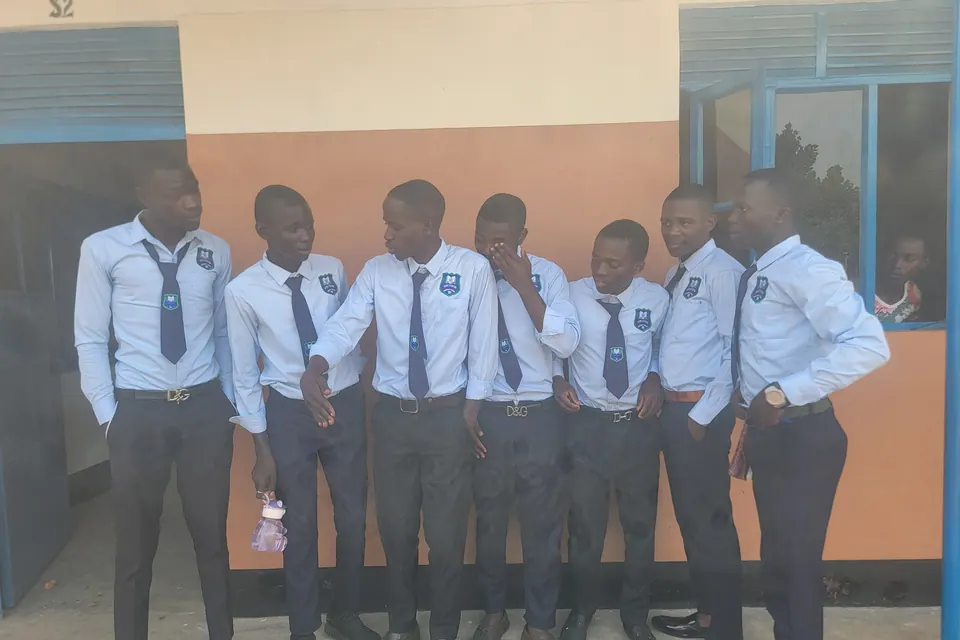
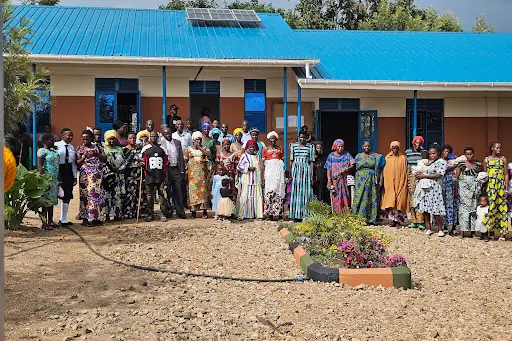
Kyangwali, western Uganda. Every morning, learners walk to school past homes and small farm plots.
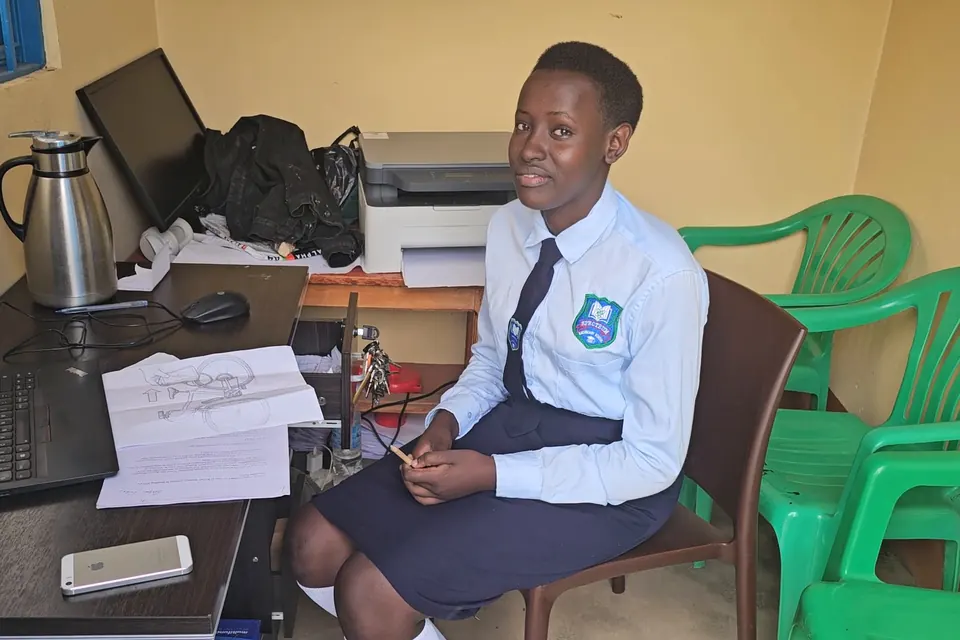
At Spectrum Secondary School, refugee and host-community learners study side by side, from S1 to S4, following the national curriculum. They bring their everyday lives with them: what their families grow and eat, where their water comes from, what things cost.
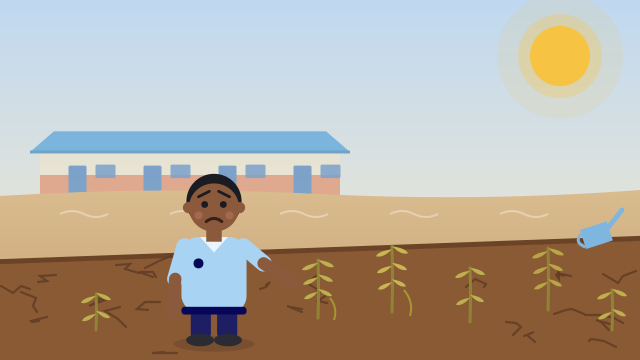
Baraka has walked past these beds many times. Today, he stops and looks.
The Junior Entrepreneurs Program (JEP) is a way of learning developed by Spectrum XLabs Alliance (SXLA). Learners start from real situations in their own lives, ask questions, learn the knowledge they need, act on it and improve, inside the national curriculum and with their teachers. Spectrum Secondary School is the first school implementing it.
Scene 2 of 9
A discomfort is not only a complaint. It shows a gap between how things are and how they could be.
Baraka“Every dry spell it is the same. The leaves go yellow and we harvest almost nothing. Why?”
Then the questions start to come:
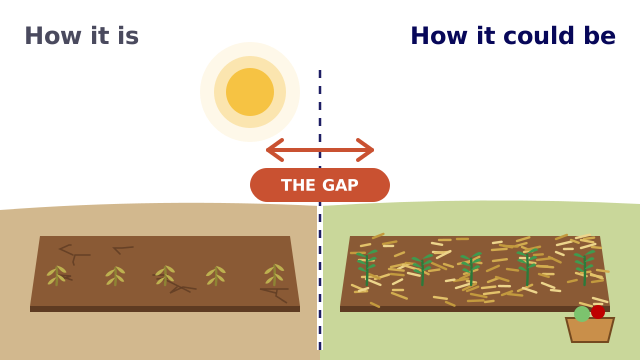
Most learners keep this kind of discomfort to themselves. It feels like a private problem, far from the classroom. In JEP, it is where learning begins.
Because it gives learners a reason to want to know. A problem a learner lives with makes the knowledge in the curriculum matter. JEP does not ask learners to dwell on hardship: it helps them see a gap they can study and, step by step, do something about.
Scene 3 of 9
The teacher does not hand over an answer or assign a project. She helps Baraka find out.
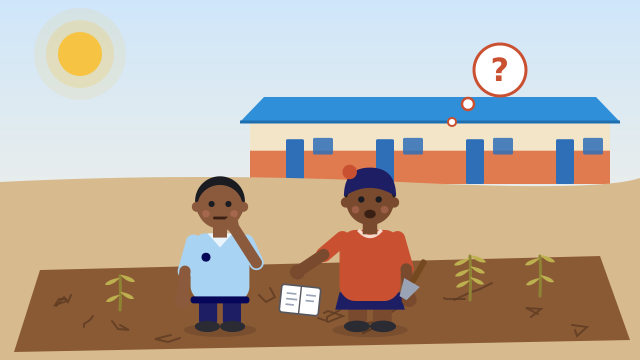
Baraka“Our garden is dying. What should we do?”
Teacher“Let us look first. What have you noticed? When does it look worst?”
Baraka“By midday the leaves droop. The soil is hard and cracked.”
Teacher“Good observation. What would you need to know to explain it?”
TogetherThey turn a complaint into a question someone can investigate: Why does our garden dry out so fast, and what could keep more water in the soil?
Teacher“That needs biology and agriculture: how plants take in water, and how soil holds it. We will learn it this week.”
The teacher teaches the knowledge the question needs, at the moment Baraka needs it.
In every scene of this story, a teacher is there. As learners grow from S1 to S4, they take more of the lead, and the teacher's role shifts from leading to coaching. It never disappears.
Yes, you still teach the curriculum. What changes is the starting point and the timing: lessons begin from a real situation learners have noticed, and you teach the knowledge it needs when they need it. You question, guide and give feedback, and you plan the work with the four parts of the JEP cycle: DISCERN, PROMPT, PROTOTYPE and FEEDBACK. How JEP works in practice
the curriculum knowledge a problem needs, when learners need it
so that learners think, rather than receive answers
the work through each part of the project
“Is that true? How do you know?”
where each learner's thinking is, and who needs help
on reasoning and evidence, not only on the final product
Scene 4 of 9
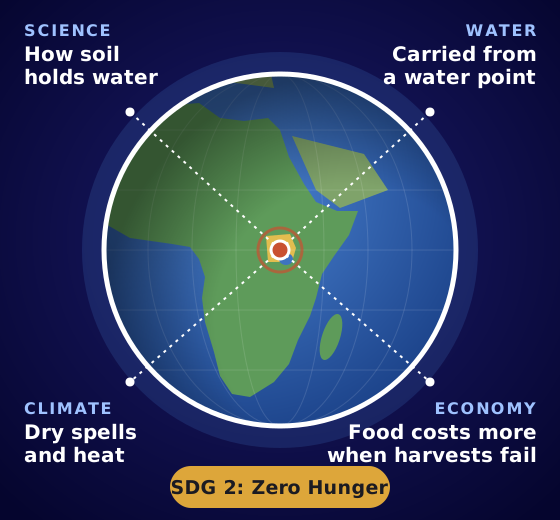
Baraka learns to look closely, then to look wider, then to come back to what he can do.
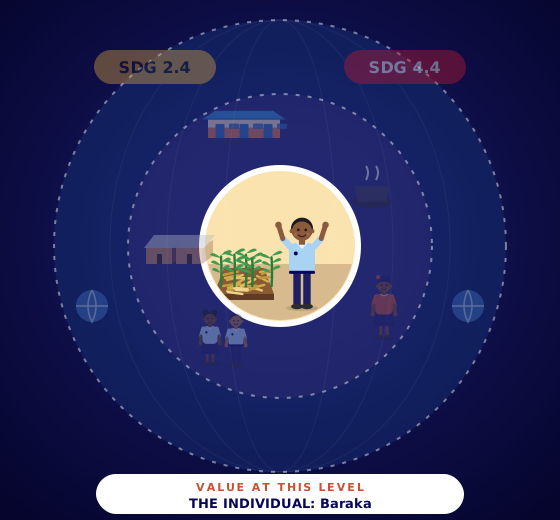
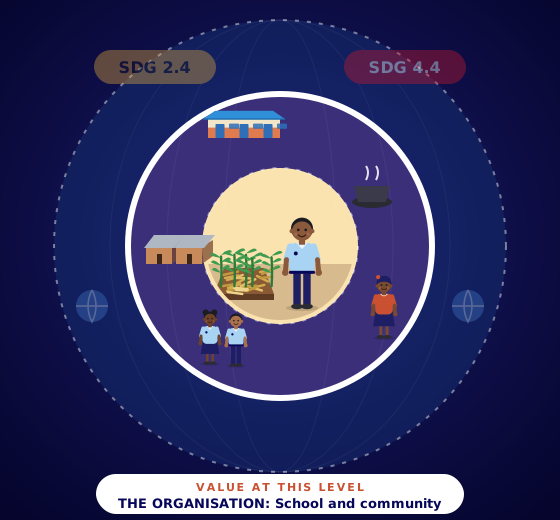
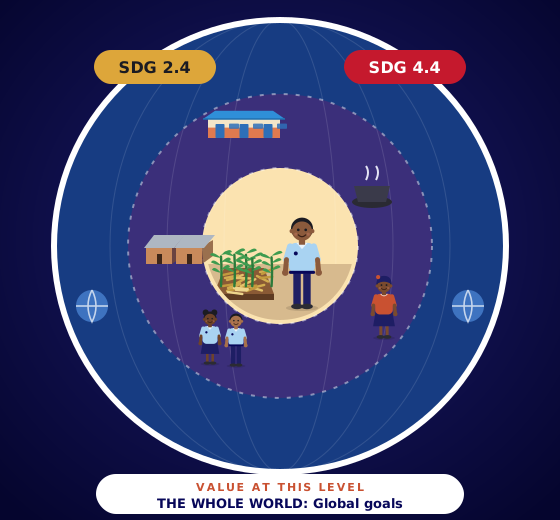
As he works, Baraka learns to notice, question, investigate, connect, act, and learn and improve. This is not a separate method. It is the same seven-stage journey, seen from inside his head. His teacher calls the most important habit zooming in and zooming out. As he zooms out, he also asks who could gain from his work: value at three levels, for himself, for his school and community, and for the world.
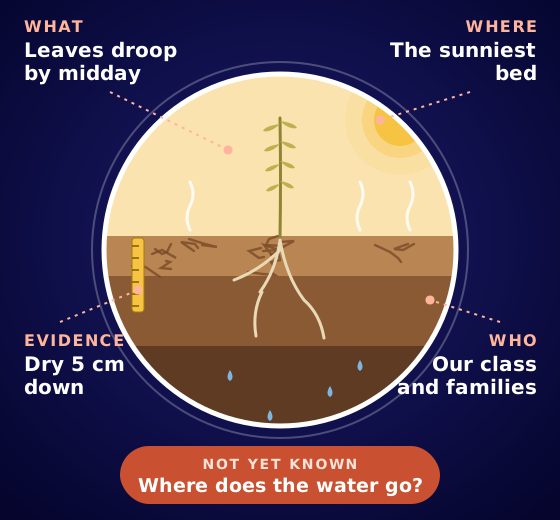
He moves close to the problem. What is happening, where, and to whom? What evidence is there? He pushes a finger into the soil: dry, five centimetres down. Then he writes down what he does not yet know: where does the water go?
Then he steps back. His garden is connected to wider systems: the science of how soil holds water, a water point where every litre is carried by hand, dry spells and heat, and the price of food when harvests fail. It is part of a global goal too: the United Nations Sustainable Development Goal 2, Zero Hunger, includes making farming more resilient to drought. SDG 2 on the UN website (opens in a new tab)
Zoom out, level 1 of 3: the individual
What could Baraka gain? Knowledge he can use: why bare soil dries fast and how covering it keeps water in. Skills: observing, measuring and recording a fair test. Confidence and agency: he chooses an action himself and sees what happens. And if the method works at home too, a possible gain for his family’s small plot and the food it grows.
Zoom out, level 2 of 3: the organisation
What could the school and community gain? A school garden that dries out less, and more produce for the school kitchen if the beds do better. A real question teachers can use to teach soil and water. A shared method, the record sheet and the fair test, that other learners can reuse. And nearby households who may try the idea on their own plots.
Zoom out, level 3 of 3: the whole world
How does a small garden connect to the world? Local actions like his contribute to two global goals: SDG 2 (opens in a new tab), Zero Hunger, target 2.4, farming practices that help crops cope with drought; and SDG 4 (opens in a new tab), Quality Education, target 4.4, young people with relevant skills for work and entrepreneurship. His two beds contribute to these goals. They do not solve global problems.
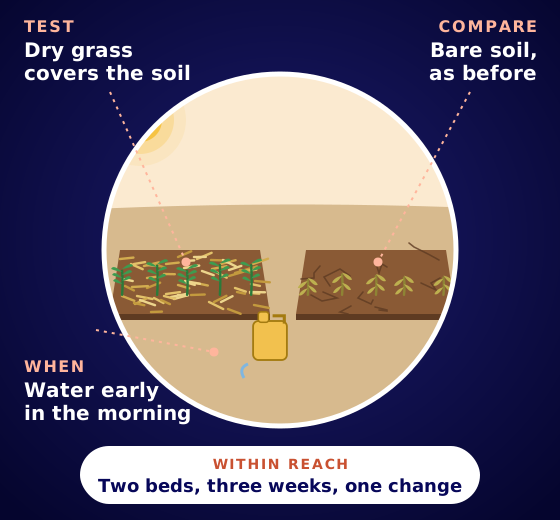
Then he comes back to the garden with a better question and an action within his reach: cover the soil of two beds with dry grass, water early in the morning, and compare them with a bed left bare, for three weeks.
Within his reach: two beds, three weeks, one change, and one bare bed to compare. The value at every level starts here.
Learners are not expected to solve world hunger. They learn to see how their problem connects to bigger ones, and to choose an action they can actually carry out and test.
Scene 5 of 9
Before Baraka reaches for any tool, he works out what he is missing.
“Choose the tool that fits the problem. You do not need AI for everything.”
Six questions guide every choice of tool. Follow Baraka through them.
Question 1 of 6
Baraka: Why our garden dries out so fast, and what could keep more water in the soil.
A clear question comes first. In JEP, learners write it down in a Problem Brief before they use any tool: what is happening, what the problem is, the goal, what they need to find out, which tool could help, and how they will check the answer.
Question 2 of 6
Baraka: Plants need water. By midday the leaves droop. The top of the soil is hard and cracked, and it is dry five centimetres down. The worst bed gets the most sun. Water is carried from the water point.
Starting from what he already knows shows him where the real gap is, and stops him from searching for things he could see for himself.
Question 3 of 6
Baraka: Knowledge: how soil holds water, and why bare soil loses it quickly. Capability: how to run a fair test, and how to record what happens.
Naming the gap precisely is what makes the next choice sensible.
Question 4 of 6
Learners start at the top and move down a step only when the step above cannot fill the gap. This is the Tool Selection Ladder from the 360° JEP Studio curriculum.
Baraka: He looks again at the beds, asks his agriculture teacher and a farmer who grows vegetables nearby, reads the chapter on soil in a library book, and then, with his teacher, asks an AI assistant to explain why covered soil stays moist and what he could test.
Brand names are examples only, not endorsements or partnerships. Spectrum Secondary School does not yet have advanced laboratories or the Studio equipment in the last two rows. Today, JEP at Spectrum has 10 laptops, 5 of them working, and one portable Wi-Fi unit. The Hybrid Edge JEP Studio is a design specification; its equipment is not at Spectrum.
Question 5 of 6
Four rules apply at every step of the ladder.
Baraka: He checks the AI’s explanation against the library book and asks the farmer whether it fits local soil. In the end, his own test in the garden is his strongest evidence.
Question 6 of 6
Baraka: Run the test. Cover two beds with dry grass, leave one bed bare, water early in the morning, and record what he sees every morning for three weeks.
The answer to this question is always an action, and every action produces new evidence. See how AI fits in or skip to the test.
In S1, Baraka’s teacher leads: she shows how an AI assistant works, and he uses it only with her. Learners gain independence class by class, up to learner-directed use with a verification log in S4. Internet and AI access by class
In JEP, AI use is supervised and grows class by class. The curriculum sets clear rules: no learner’s personal data goes into online tools or cloud AI, every answer is checked, and learners say when AI helped. From S3, cloud AI is used only with teacher approval, where the provider’s age rules allow. The filtered Studio network and guarded local AI tutor are part of the Hybrid Edge JEP Studio specification.
Used well, it can help a learner understand an idea, see other possibilities and organise their thinking. JEP teaches learners when AI helps, when it does not, and how to check it. AI is optional and depends on the task: many steps of a project need no AI at all.
Scene 6 of 9
AI enters the story only when it can fill a specific gap. Baraka’s teacher stays beside him.
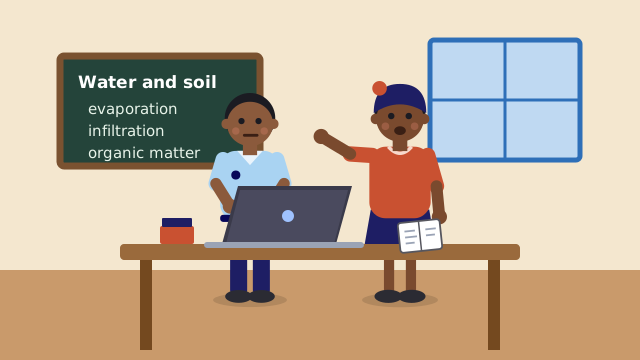
Check this. We have no piped water at school. Every litre is carried from the water point.
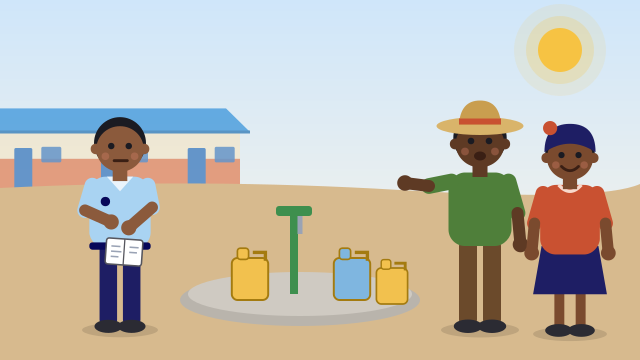
Farmer“Cover the soil with dry grass. It keeps the water in. And water early, before the sun is strong.”
Teacher“Good. Now test it, so you know it works here, not just that someone said so.”
Baraka“Then I will need a fair test, and a way to record it.”
AI is a tool for supporting learning. It is not a substitute for evidence, human judgement, practical investigation or teachers.
Look at the reasoning: the question, the evidence, how sources and AI answers were checked, the test, and what was improved. In JEP, learners record when and how AI helped, and they must be able to explain their work without it. From S3 they keep a verification log. Assessment captures learning and reasoning, not only the quality of the final product.
Scene 7 of 9
Tools become useful when they are combined with knowledge, action and feedback.
For three weeks, Baraka checks the beds every morning before school and writes down what he finds.
A spreadsheet helps him see the pattern, and a simple chart makes it easy to share. The record matters more than the tool: a notebook would do the same job.
| Day | Soil, bed A (grass) | Soil, bed B (grass) | Soil, bed C (bare) | Leaves, A | Leaves, B | Leaves, C |
|---|---|---|---|---|---|---|
| Day 1 | Damp | Damp | Dry | Upright | Upright | Drooping |
| Day 8 | Damp | Damp | Dry | Upright | Upright | Drooping |
| Day 15 | Damp | Damp | Dry | Upright | Mostly upright | Drooping |
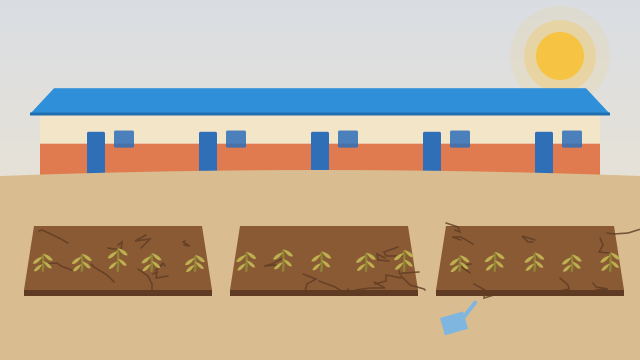 Before
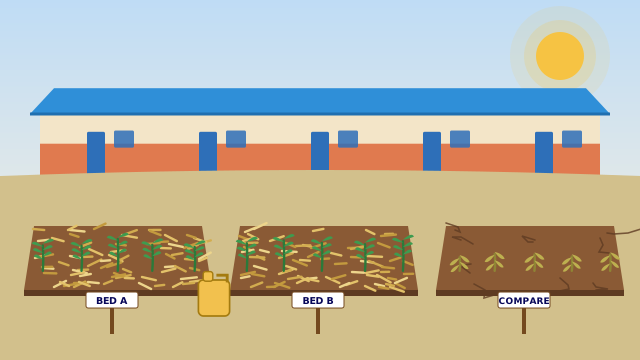 After three weeks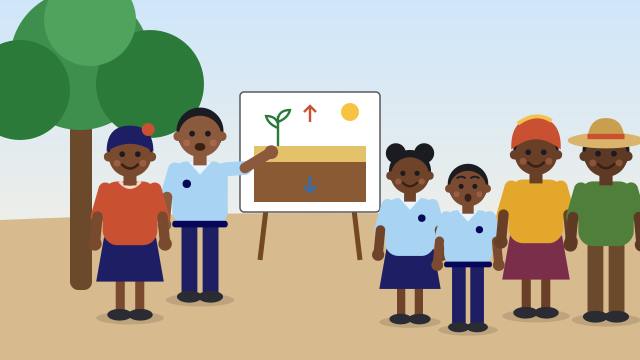
New evidence, new question
The covered beds stay damp for longer. But Baraka notices termites eating the dry grass. A new question begins: what could cover the soil without feeding termites?
The journey is a loop, not a fixed sequence. New evidence sends Baraka back to a new question, and round again. In the classroom, his teacher organises the same work with the JEP cycle: DISCERN, PROMPT, PROTOTYPE and FEEDBACK. Learning stages and the learning cycle: what is the difference?
Then the learner has learned something. A test that does not work is evidence: it shows what to change. Feedback and improvement are part of every JEP project, and learners are assessed on their reasoning and what they learned, not only on whether the idea worked.
Notices a real situation, asks questions, learns what is needed from teachers, people and sources, chooses suitable tools, tries something, records what happens, listens to feedback and improves it. Learners are guided to investigate problems. They are not expected to solve every problem they find.
Short glimpses of the kinds of problems learners investigate. The illustrated ones are examples; the two marked as real come from Spectrum Secondary School.
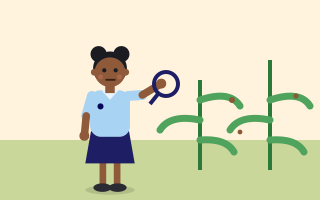
Holes in the maize leaves. Which pest is it, and what can a family do without costly chemicals?
Possible pathway: Research
Homework by the light of a kerosene lamp. How long does a small solar lamp last, and is it worth what it costs?
Possible pathway: Further learning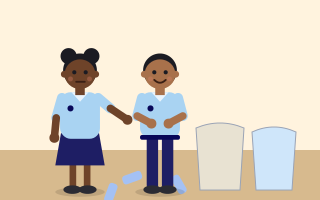
Plastic bottles across the school compound. What can be reused, and would anyone pay for it?
Possible pathway: A small business, for some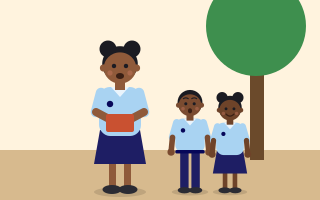
Younger children with few books at home. Could a reading club help them read sooner?
Possible pathway: Community improvement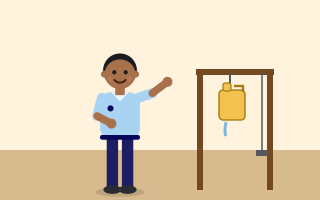
Nowhere easy to wash hands. Can a simple handwashing station work at school?
Possible pathway: A better practice at school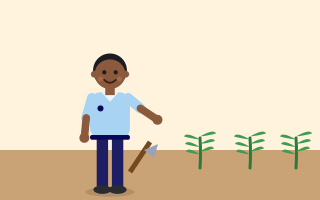
Trees cut for firewood. Which seedlings grow well here, and who will look after them?
Possible pathway: Community action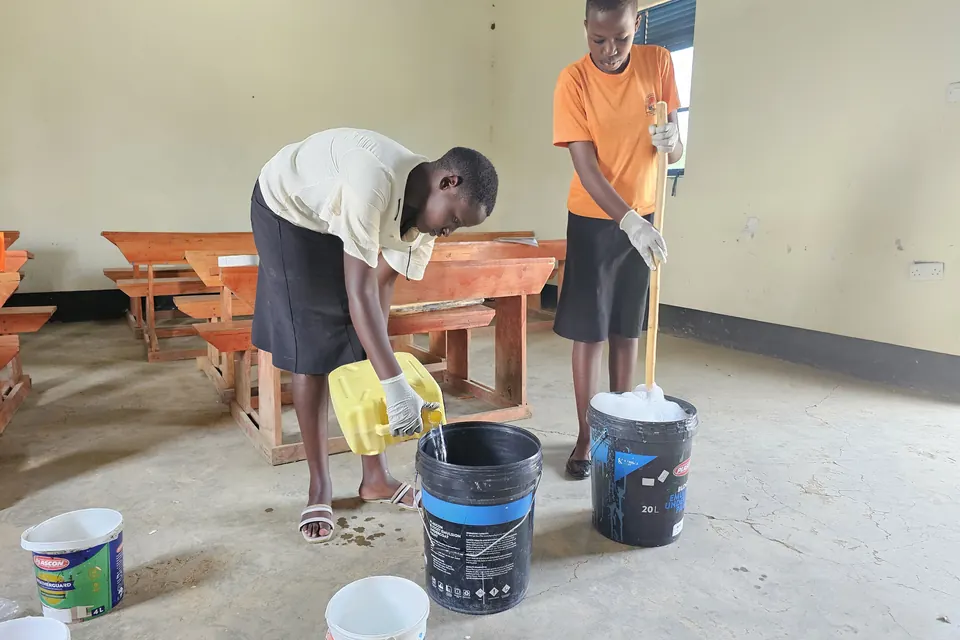
An S4 learner team makes liquid soap for the school, which used to buy it from outside suppliers.
The S4 liquid soap team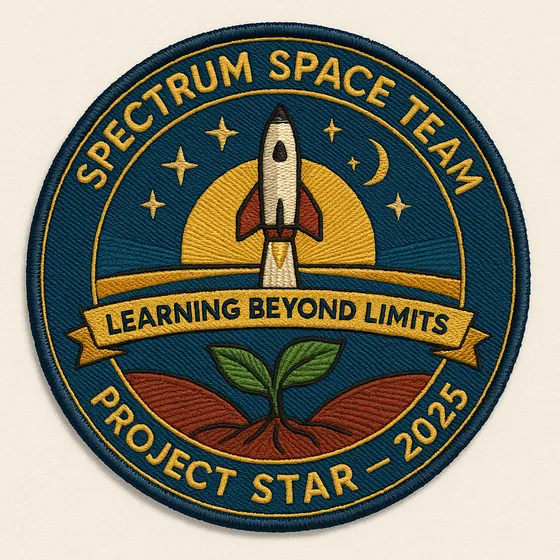
Two JEP learners won the Best Mission Patch award in an international space design competition.
Best Mission Patch awardA project may lead to a better practice at home or at school, a community intervention, research, a product, a service or, for some, an enterprise. Entrepreneurship is one possible pathway, not the destination.
Entrepreneurial capabilities that matter whatever a learner goes on to do: problem-solving, initiative, creativity, financial understanding and building useful solutions, together with agency, the growing ability to make informed decisions. These are intended outcomes. SXLA’s own 2025 programme assessment is internal and not yet independently verified. Impact and evidence
Scene 8 of 9
Baraka’s story needs a school that makes room for it. JEP asks schools to make four changes.
The gapNo one asks about it.
The JEP responseTeachers invite learners to identify what frustrates them, what they notice, and what they want to understand.
For Baraka: Baraka’s garden becomes a topic in class, not a problem he carries alone.
The gapNo project method.
The JEP responseLearners receive guidance to define a problem, investigate it, test ideas, and improve their work.
For Baraka: He has a method to follow, from a question to a test to an improvement.
The gapNo tools or resources.
The JEP responseLearners gain access to appropriate knowledge, people, research materials, digital tools, and practical resources.
For Baraka: He can reach the knowledge, people and tools his question needs, starting with what is available locally.
The gapExams on other problems.
The JEP responseLearners apply curriculum knowledge through relevant assignments, demonstrations, investigations, project portfolios, and feedback while maintaining required curriculum coverage and examination preparation.
For Baraka: His investigation counts as learning, and his exam preparation continues.
The changes work together, as one model. JEP complements the national curriculum and its examinations. It does not replace them, and it does not replace teachers.
Protected time in the timetable, a place to work, teachers who are trained and coached, and access to materials, people and tools. A school can begin with what is available locally: expensive technology is not required to start. SXLA plans to support partner schools from 2029 through the JEP Studio Hub-and-Box Model, after the 2027 review at Spectrum. JEP for other schools
No. Learners apply the knowledge the curriculum already asks for, in subjects such as biology, agriculture, geography and mathematics, and required coverage and examination preparation continue. JEP gives learners a reason to learn it, and a chance to use it.
Scene 9 of 9
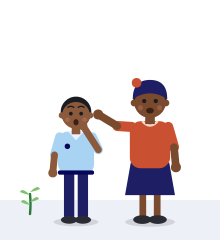
Baraka starts S1 in 2026. By the time he leaves S4, many of the skills needed for work are expected to have changed.
2026
S1 Explorer
Teacher-guided. Baraka learns to notice, question and find out. His teacher leads any use of AI.
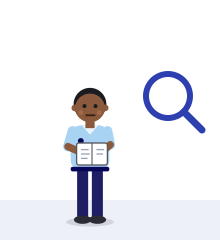
2027
S2 Investigator
He plans his searches and runs his own tests.
At Spectrum today, JEP runs on 10 laptops (5 working). The Hybrid Edge JEP Studio is a design specification, not yet equipment at the school.
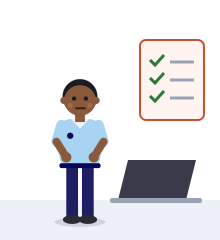
2028
S3 Investigator
He researches more independently and keeps a log of how he checked what he found.
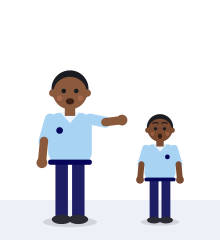
2029
S4 Innovator
Learner-led. He directs his own project and helps younger learners with theirs.
2030
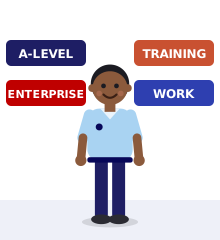
Next A-level, training or work
Whatever he chooses, he takes the habit of finding out with him.
Every year, the same journey goes deeper, and Baraka takes more of the lead. Baraka is an illustrative learner, not a real person.
On average, workers can expect that two-fifths (39%) of their existing skill sets will be transformed or become outdated over the 2025 to 2030 period.
World Economic Forum, Future of Jobs Report 2025, January 2025. A projection based on a survey of more than 1,000 employers in 55 economies; global, not specific to Uganda. Read the report (opens in a new tab)
Learners are preparing for a world in which the skills needed for work keep changing. Employers in the same survey expect technological skills to grow in importance fastest, and creative thinking, and curiosity and lifelong learning, to grow in importance too. The skills outlook (opens in a new tab)
So the most useful thing school can give Baraka is not a fixed set of answers. It is the ability to keep learning, investigate problems, judge information, work with others and use technology responsibly. That is what JEP practises in every project.
48.2% of young people aged 18 to 30 in Bunyoro sub-region, which includes Kikuube and Hoima, are not in employment, education or training. UBOS, from the Census 2024 (opens in a new tab)
Secondary learners in Kyangwali can recall what they are taught but are not yet able to use it, and the challenges they live with rarely enter the classroom. Uganda’s curriculum asks for projects, but schools lack a project method, a way to choose and check tools and AI, and assessment that rewards testing and improving. The problem and the evidence
A baseline and a comparison group start in 2027, so that future reports show measured change, and an independent mid-term review is planned for 2028. Progress would show as learners moving up SXLA’s five-level capability scale: for example, the share of JEP learners at Level 4 (Capable) or above rising from 30% to 50%, measured against a comparison group. These are targets, not results. Theory of change and targets
Each question links to the scene that answers it.
External sources for the facts in this story, checked on 17 October 2026. Everything about Baraka is illustrative; everything about Spectrum Secondary School and the plans for JEP comes from SXLA’s own records and documents.
World Economic Forum, January 2025
A survey of more than 1,000 employers on how jobs and skills are expected to change between 2025 and 2030. Source of the 39% projection in Scene 9.
United Nations, Sustainable Development Goals
End hunger, achieve food security and improved nutrition and promote sustainable agriculture. Target 2.4 includes resilient agricultural practices that help farms adapt to drought. Used in Scene 4.
United Nations, Sustainable Development Goals
Target 4.4: by 2030, substantially increase the number of youth and adults who have relevant skills, including technical and vocational skills, for employment, decent jobs and entrepreneurship.
Uganda Bureau of Statistics, 19 September 2025
Figures from the National Population and Housing Census 2024, including the share of young people in Bunyoro sub-region not in employment, education or training. Used in Scene 9.
From SXLA’s own documents. The Tool Selection Ladder, its four rules and Internet and AI access by class come from the 360° JEP Studio curriculum. School figures come from Spectrum Secondary School records. Resources and downloads
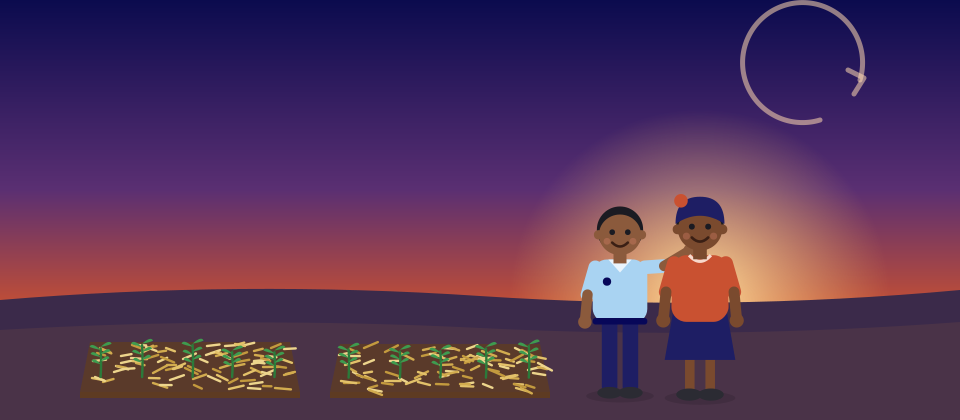
The end of this story, and the start of the next question
Story and illustrations: SXLA. Photographs: SXLA, showing the real setting at Spectrum Secondary School. Baraka is an illustrative learner, not a real person. The people in the illustrations are illustrative. This story shows how JEP is designed to work; it does not report results.
Why SXLA created JEP, and how learners move from a real challenge to knowledge, action and feedback.
Find out more
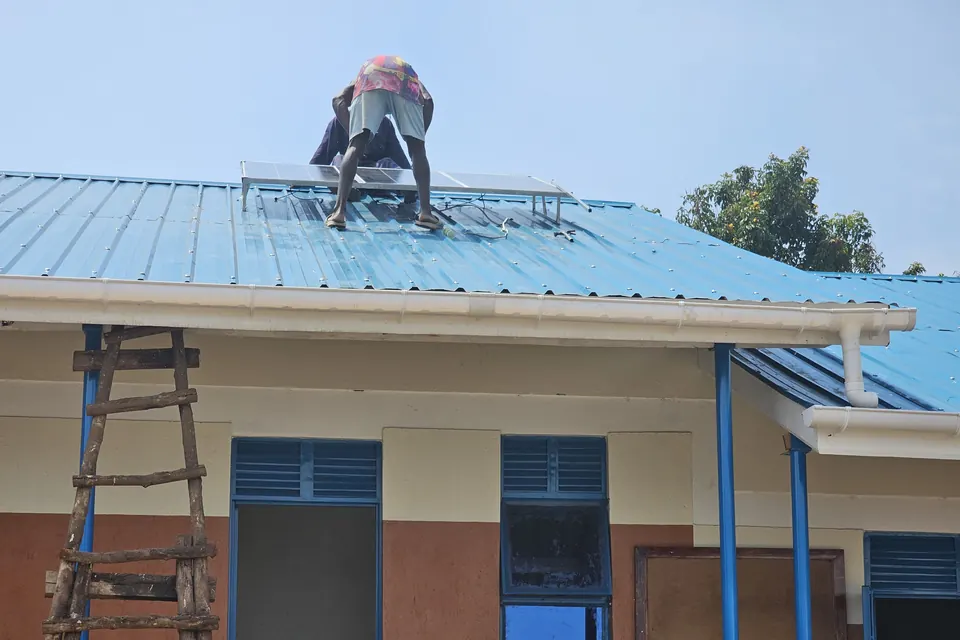
The Hybrid Edge JEP Studio: what it includes, and how it works with or without the internet.
Find out more